Building Your Design Resource Roadmap: The Tools Industry Insiders Actually Use
July 19, 2026 · 7 min read
Every designer eventually hits the same wall: inspiration on demand. Deadlines don't wait for a lightning-bolt idea to strike, and "I'll know it when I see it" isn't a strategy you can hand to a creative director or a mill partner. What separates designers who stay fresh season after season from those who burn out chasing trends isn't talent alone. It's a personal system, a curated set of resources they return to again and again, paired with the discipline to make those inputs their own rather than simply repeating them back.
Below is a working list of resources that show up again and again in conversations with textile, apparel, and home design professionals, along with a case for why the tools matter less than what you do with them.
The Forecasters: WGSN and Pantone
WGSN has been the industry's default trend forecasting subscription since 1998, and it's grown well beyond fashion. The platform analyzes global cultural, consumer, and market shifts to deliver forecasts across fashion, beauty, interiors, and other categories. For interiors and product design specifically, WGSN brings together aesthetic strategy, CMF (color, material, finish) innovation, and sustainability intelligence to forecast the future of residential and commercial spaces, with specialist coverage spanning furniture, decor, hospitality, and more. The library also bundles in color tools, so its design resources include Coloro and Pantone libraries alongside royalty-free prints, graphics, and CAD assets meant to speed up product development.
Pantone solves a different problem: precision. Before the Pantone Matching System existed, describing "blue" to a printer or a mill was a guessing game. Pantone's system assigns a standardized numerical code to every color in its catalog, letting designers, manufacturers, and brands communicate color specs with precision regardless of medium, material, or location. The Color of the Year has become the industry's shorthand for where the cultural mood is heading. Pantone has selected a Color of the Year since 1999, with each year's pick meant to reflect the global emotional mood and predict the tone of the year ahead — 2026's selection is Cloud Dancer, a shade Pantone frames as answering a broader need for calm and tranquility.
The Archives: Baxter Mill Archive and Lummi
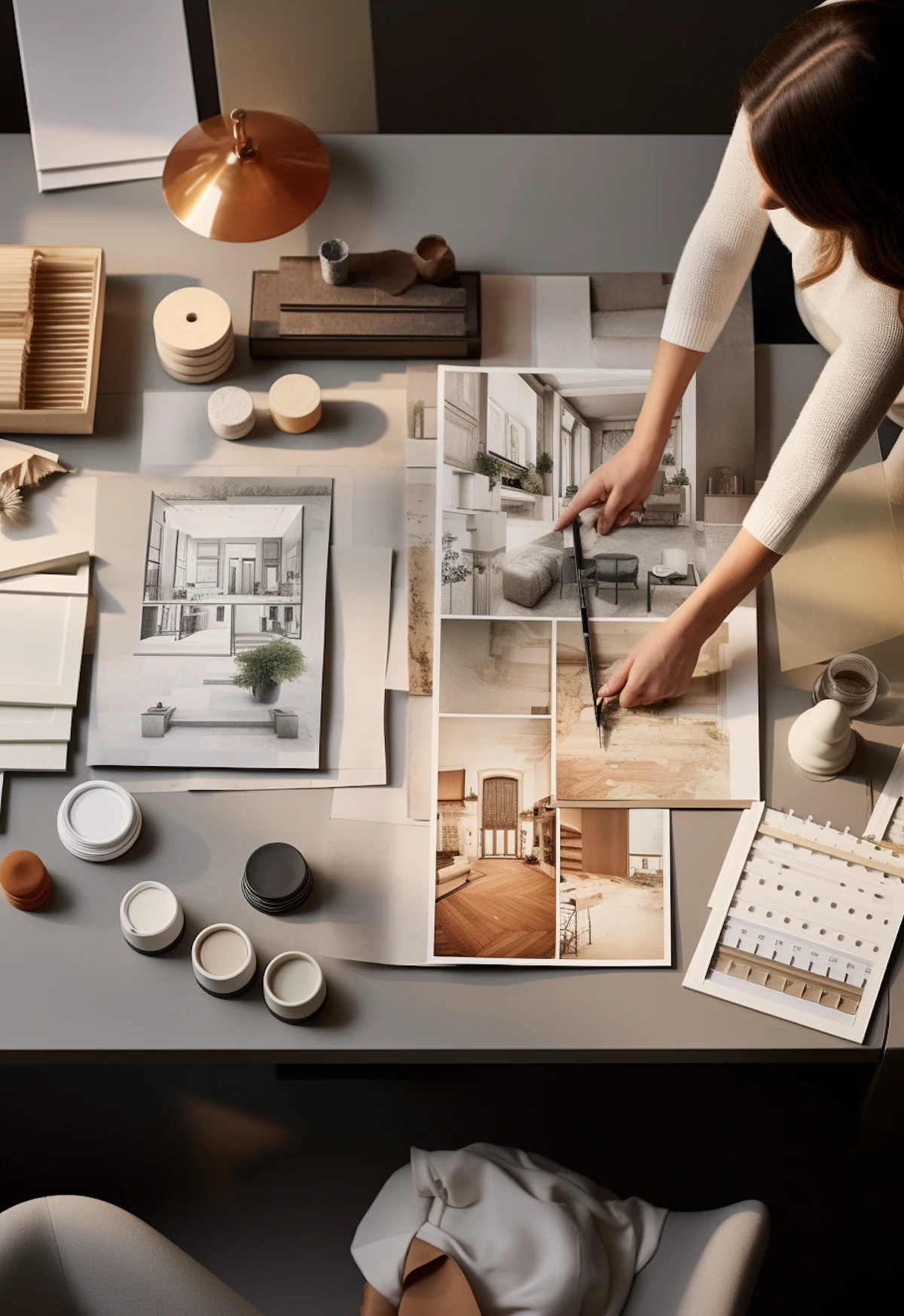
Baxter Mill Archive, based in Rock Hill, South Carolina, is one of the largest private textile archives in North America. It's rooted in the Springs and Close family legacy in American textile manufacturing, dating back more than a century, and the archive has grown through a series of acquisitions to encompass legacy collections like Springmaid, Wamsutta, and Concord House, along with the Ilene Danchig, Alicia Messina, and Frank Cassata studio archives. Physically, it's drawers of hand-drawn florals, mid-century geometrics, and mise en cartes with colors that have softened over decades. The point isn't nostalgia; it's raw material. Brands and mills come to Baxter Mill looking for a starting point — a paisley, a shibori indigo, a Star Wars-era geometric — and the archive team pulls, enlarges, rescales, recolors, and digitally reprints historical designs into something new. It's a working example of a broader truth about inspiration: almost nothing is generated from nothing. The skill is in what you do with a reference once you have it.
Lummi sits on the opposite end of the spectrum — a newer, AI-curated library of tens of thousands of free stock images, illustrations, and 3D assets, built by digital artists rather than pulled from a historical archive. It's become a go-to for designers who need mood-board or presentation visuals fast, with filtering by color, orientation, and luminance, and integrations into tools like Figma, Webflow, and Canva. It won't replace an archive dive, but it fills a real gap: quick, non-generic visual references when you don't have weeks to source.
The Markets: Where Inspiration Gets Tested in Person
Digital resources are essential, but nothing replaces walking a market floor. A few worth knowing:
Las Vegas Market, held at the World Market Center twice a year (summer and winter), is a furniture, home décor, and gift market with more than 3,500 resources across permanent showrooms and temporary exhibits.
High Point Market is the big one. Held every April and October in High Point, North Carolina, it's widely regarded as the largest home furnishings trade show in the world — over 11.5 million square feet of showroom space, roughly 2,000 exhibitors across some 180 buildings, and 70,000 to 80,000 attendees from more than 100 countries at each edition. It's open to trade professionals only, and it functions as much as a trend-spotting event as a sales floor — the show's "Style Spotters" program brings in design experts specifically to identify what's rising to the surface each season.
Beyond the two most familiar names, a fuller circuit worth building into a yearly rhythm includes Première Vision (fabric and leather sourcing, previewing collections roughly two seasons out), Texworld / Printsource (co-located fabric, trim, and surface design markets), Heimtextil in Frankfurt (billed as the world's leading trade fair for home and contract textiles), Interwoven in High Point (the only U.S. market dedicated specifically to textiles, leather, and trim for home furnishings), LA Textile, Surface Design Show in London, Salone del Mobile in Milan (the world's leading furniture and design fair, including Euroluce), 3 Days of Design in Copenhagen, and ITMA, the textile machinery exhibition held once every four years. Round out the calendar with cultural touchpoints that shape taste more broadly — Round Top for antiques, and Art Basel Miami Beach for contemporary art — and you have a circuit that covers sourcing, manufacturing, retail, and pure aesthetic reference in a single annual rhythm.
What It Means to Be Inspired, on Purpose
Here's the part that doesn't show up in any resource list: none of these tools tell you what to make. WGSN can tell you a color story is trending. Pantone can give you the exact code. Baxter Mill can hand you a hundred years of pattern history. High Point can show you what a thousand competitors are launching this season. But every one of those inputs is shared. Everyone with a subscription sees the same forecast. Everyone walking the same market aisle sees the same product.
The designers who stand out aren't the ones with access to more resources. They're the ones who've built a personal filter — a point of view sturdy enough that the same forecast, run through their eye, comes out looking like nobody else's work. That filter isn't something a tool gives you. It's built deliberately, over time, out of the references that genuinely move you rather than the ones you're supposed to cite. A childhood memory, a piece of family history, a trip that rearranged how you see color, an obsession with a specific decade or region — these are the things that turn a shared archive into a private one.
Practically, that means treating inspiration as a practice, not an event. A few habits worth building into a personal roadmap:
- Keep a running archive that's yours, not borrowed. Photos, swatches, sketches, screenshots — the raw, unfiltered material that catches your eye before you know why. The "why" comes later, and often it's more interesting than anything a trend report would have told you.
- Separate research from response. Look at what WGSN or a market floor says is coming, and then close the tab before you start designing. Let the trend inform your instinct rather than replace it.
- Revisit sources on a schedule, not just under deadline. An archive dive or a market walk done with curiosity produces different work than one done in a panic three weeks before a bed build.
- Notice what you keep coming back to. If you find yourself repeatedly drawn to the same era, palette, or motif across unrelated projects, that's not a rut — that's your point of view surfacing. Build toward it instead of resisting it.
The resources above are genuinely excellent, and worth building into a regular rotation. But the roadmap that actually matters is the one that starts with your own curiosity and uses these tools to sharpen it, not replace it. The industry has plenty of people with access to the same forecasts. It has far fewer with a point of view no forecast could have produced.
Looking for your next role in this world? Browse textile design jobs on Thread Careers.